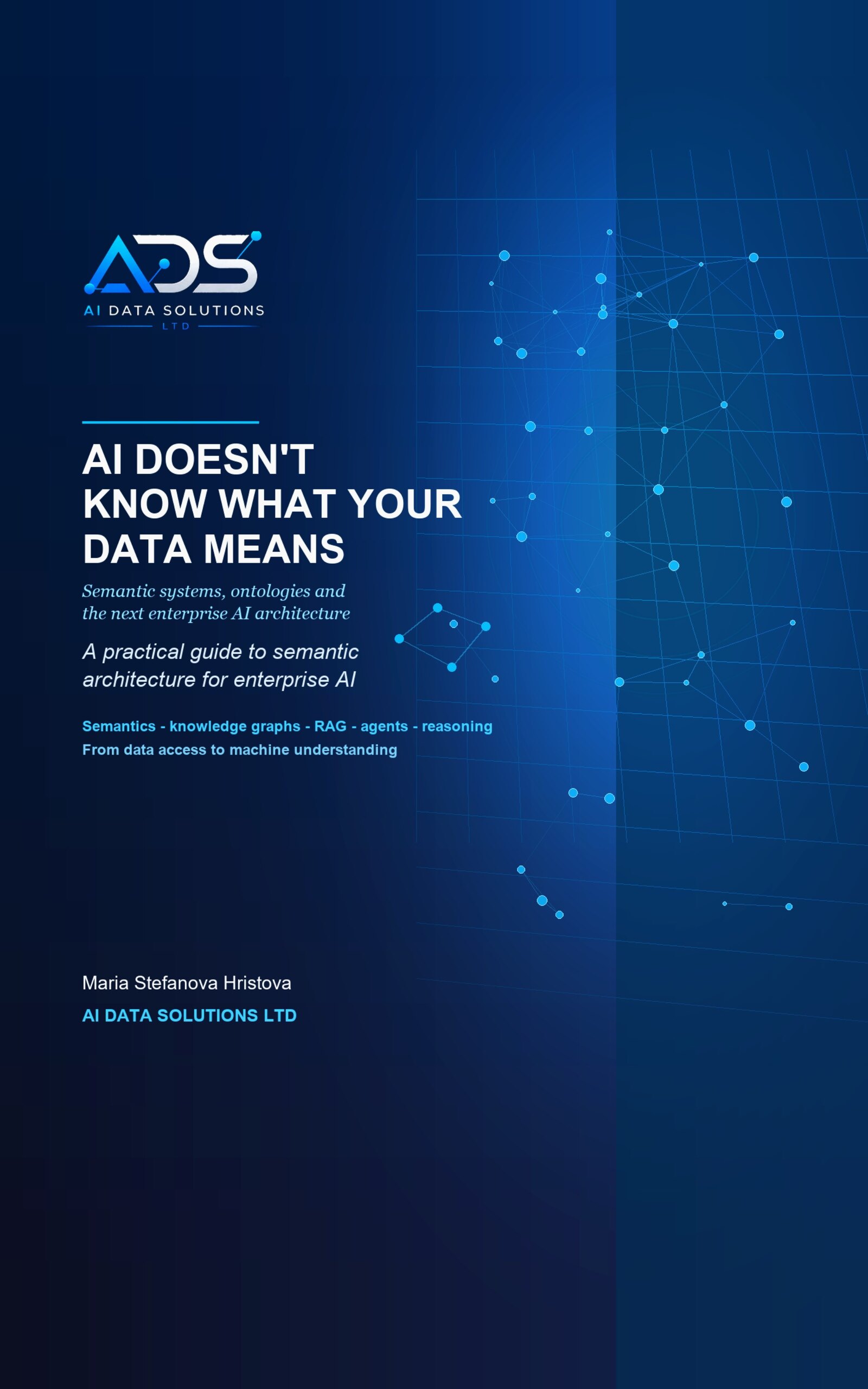
AI Doesn’t Know What
Your Data Means
AI Doesn’t Know What Your Data Means is a practical guide to a central enterprise AI challenge: giving machines access to data is not the same as giving them an understanding of what it means. It shows how semantics, ontologies, knowledge graphs, metadata and provenance create machine-operable meaning across systems. It also connects that foundation to RAG, GraphRAG, reasoning and AI agents so they can use authoritative context and act within policy.
- Physical format
- SOFT COVER
- Price
- €24.00 per copy
- Availability
- Checking availability…
The digital edition is delivered by Amazon Kindle. The Soft Cover is posted to you in Bulgaria by Speedy, and delivery is paid separately to Speedy. Maximum 2 Soft Cover books per order.
About the Book
Modern AI can query databases, retrieve documents, generate SQL, search vector stores and call APIs while still misunderstanding the business concepts behind the information.
This book presents a practical semantic architecture that helps enterprise AI understand what data represents, how concepts relate, which sources are authoritative and what actions are allowed.
About the Author
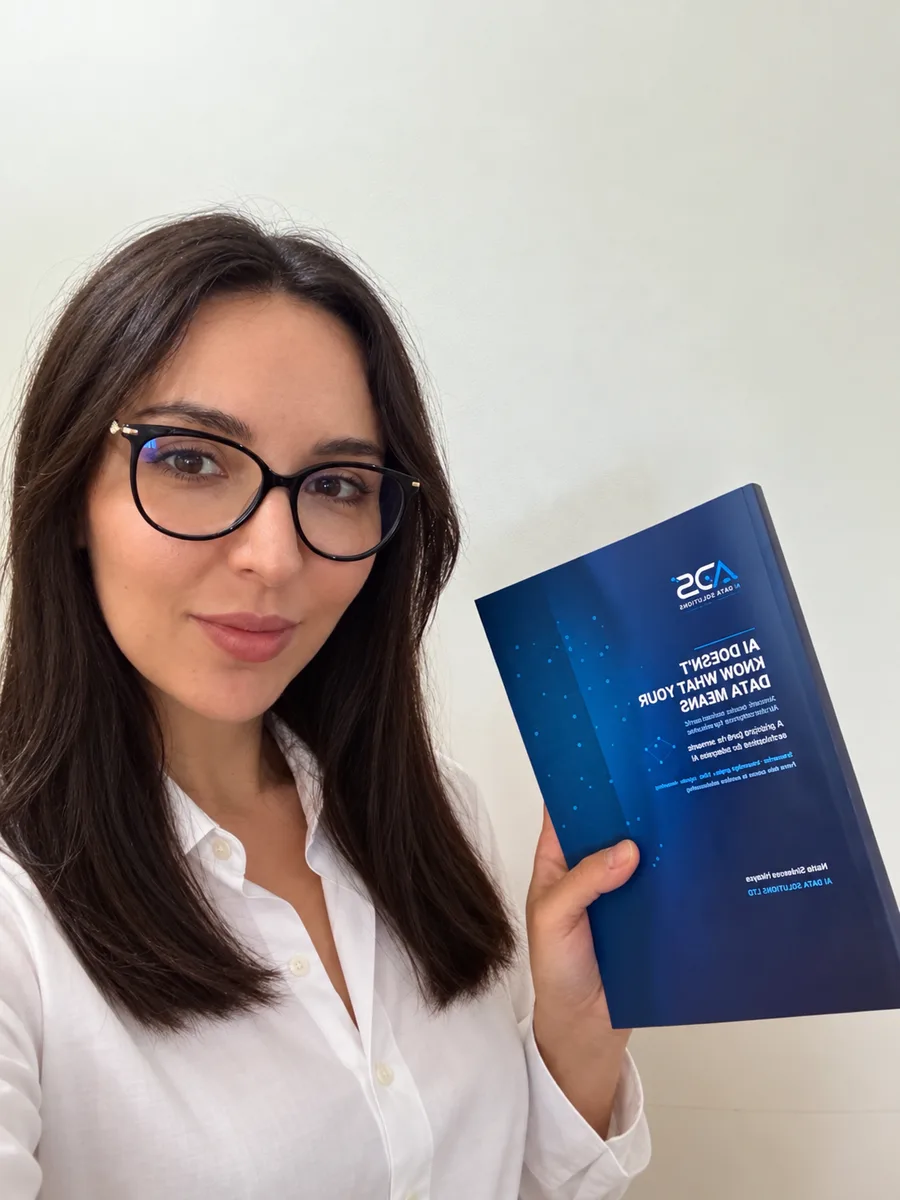
Maria Hristova is a Solution Architect, author, and inventor working at the intersection of enterprise data, semantics, knowledge graphs, and artificial intelligence.
She is the author of "AI Doesn’t Know What Your Data Means", which explores one of the fundamental challenges facing enterprise AI: giving an AI system access to data does not mean it understands what that data represents. Her work focuses on how semantic models, ontologies, identity, provenance, and knowledge graphs can provide the foundation for more grounded, explainable, and trustworthy AI.
Maria is also the inventor of "Ontelyx", an approach designed to transform fragmented enterprise information into connected, machine-understandable knowledge that can support semantic discovery, AI reasoning, and intelligent agents.